Advadnoun
April 5th, 2024
Zahir: Generative Recommenders for Unprompted, Scalable Exploration
To have one’s mind devoured by coins, that is a terrible fate
- Jorge Luis Borges
tl;dr
Many contemporary systems for generating media condition on text descriptions to specify styles and semantics.
What does generation look like when we leverage recommendation methods to attempt to synthesize media with styles and scenes that users may be interested in based only on their & their peers’ interactions with that media?
Furthermore, what are the implications of this combination of personalization, preference learning, generation, and recommendation – and how might it be used within an artistic practice?
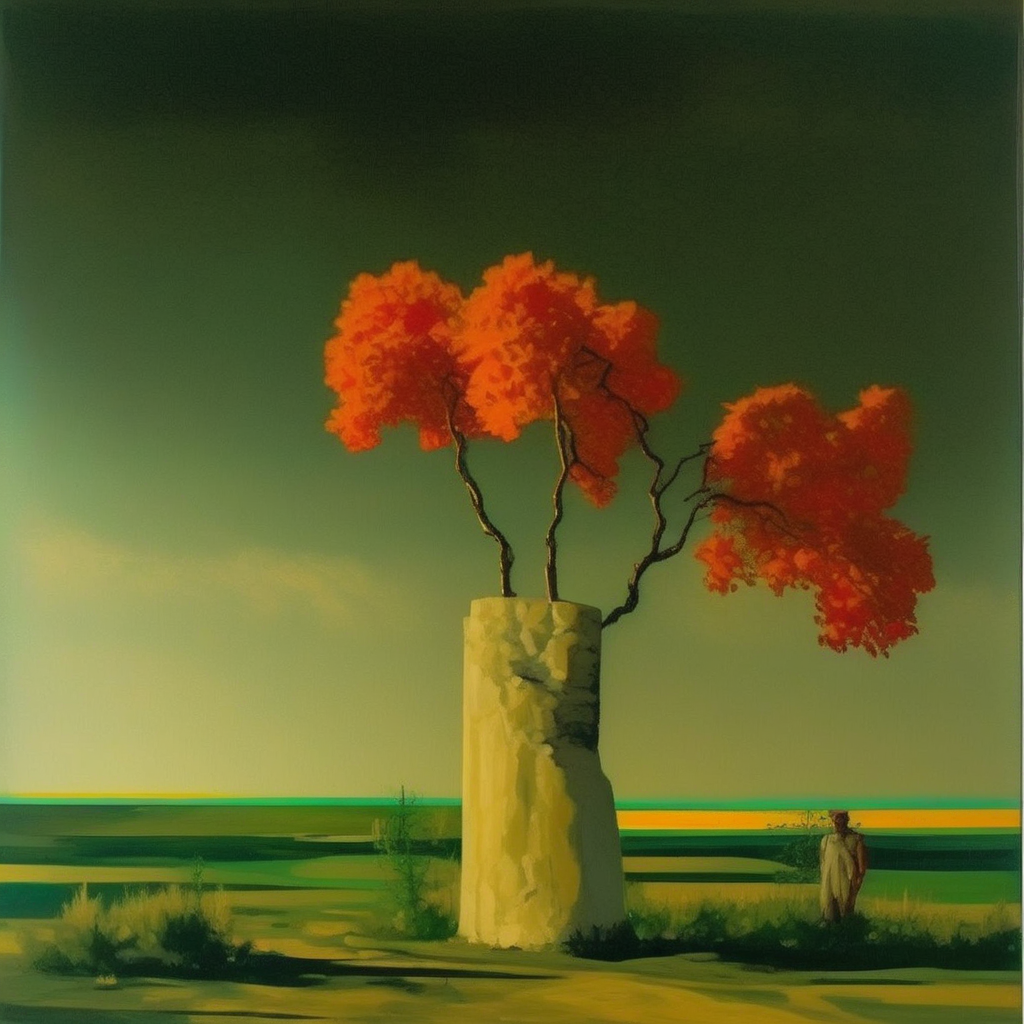
Some Background
There’s a rich precedent of unconditional image generation as a medium for art that predates text-to-image systems as we encounter them today (i.e., open-domain systems with web-scale breadth at high resolution) by several years. Helena Sarin & Mario Klingemann are two of my favorite exemplars here, though they also have and did utilize conditional methods as well.
While the methods proposed here are not unconditional, I see them as a movement away from explicit prompting and a return to a spirit of artist-as-curator or explorer – and the conditioning/prompting are subtle enough to be seen as spiritually similar to unconditional methods.
Choosing this return to un-prompted generation is elicited in part by dissatisfaction with existing methods’ grand-average default aesthetics and by my (over)use of TikTok.
While previous work on personalizing models based on collaborative filtering exists (e.g.
Caicedo et al., 2011) and shows that personalized aesthetics can improve on using only averages, and while previous work exists for personalizing models using iterative feedback within the space of inputs (Zhou et al., 2024) or leverages optimization approaches with recommenders for visualizing user embeddings (Kang et al., 2017), the approach described here could allow for fast, scalable systems capable of working in similar ways to existing social media ecosystems with purely or primarily generated media.
Collaborative Filtering for Generative Recommendation
Collaborative filtering learns user embeddings and item embeddings based on a matrix of interactions between each user and some set of items.
Users’ embeddings should be aligned with items that they showed preference for, which we can enforce using weighted alternating least squares (WALS).
Using a dataset of images and users in which different users have provided ratings for the same set of items, we can create user embeddings that simultaneously capture information about groups’ preferences while also inheriting alignment with CLIP latents.
We do this by running typical WALS with the additional constraint that item embeddings must be aligned well with corresponding CLIP image embeddings. This allows for user and item embeddings that can change and incorporate information from each other while still being visualizable by any system that incorporates or conditions on CLIP embeddings.
These user embeddings are then usable for generation alone or as a direction with a provided prompt.
See the link to code towards the end for an example.
This method of producing directions directly in CLIP latent space can also be done sans collaborative filtering, is similar to:
and was introduced to me by Joel Simon.
Most open image-preference datasets do not have recorded user IDs, and when they do there is rarely overlap in ratings of images.
FLICKR-AES is a nice exception & was used here for that reason.
While this dataset is made up of real images, this same approach could be used solely with generated images or a mix thereof.
One could imagine a process where:
- Images are generated
- They’re rated
- New images are generated based on those ratings
– all without intervention, while the system continually learns what similar users tend to find interesting.
Upon inspecting user embeddings from this method, it’s clear that they’re useful (even at the scale of a portion of FLICKR-AES with only tens of ratings) for generating images with styles and contents that are aesthetically pleasing and reminiscent of items that were rated highly.
They also have properties that we’d expect, like clustering, with users who liked similar images having high cosine similarity with each other.
The two images below are generated with IP Adapter from two high-cosine-similarity user embeddings.
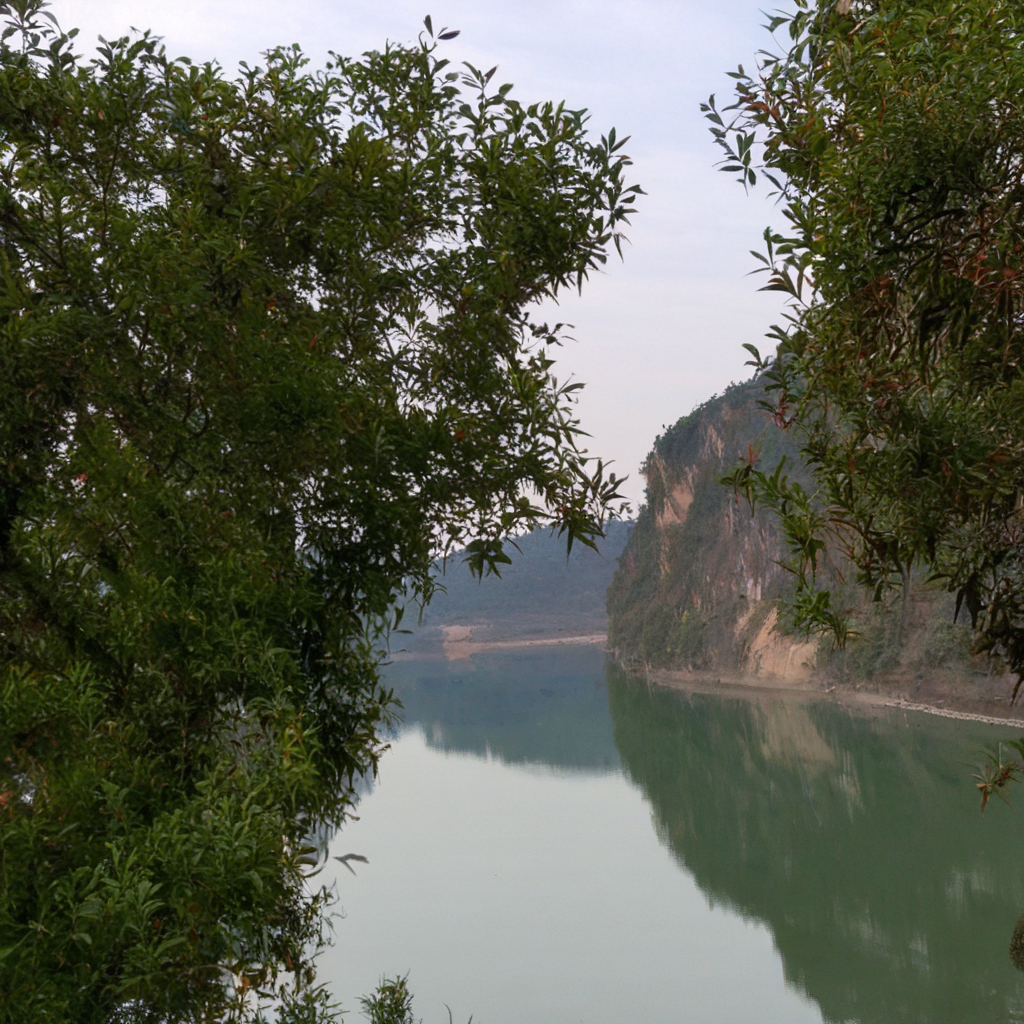 |
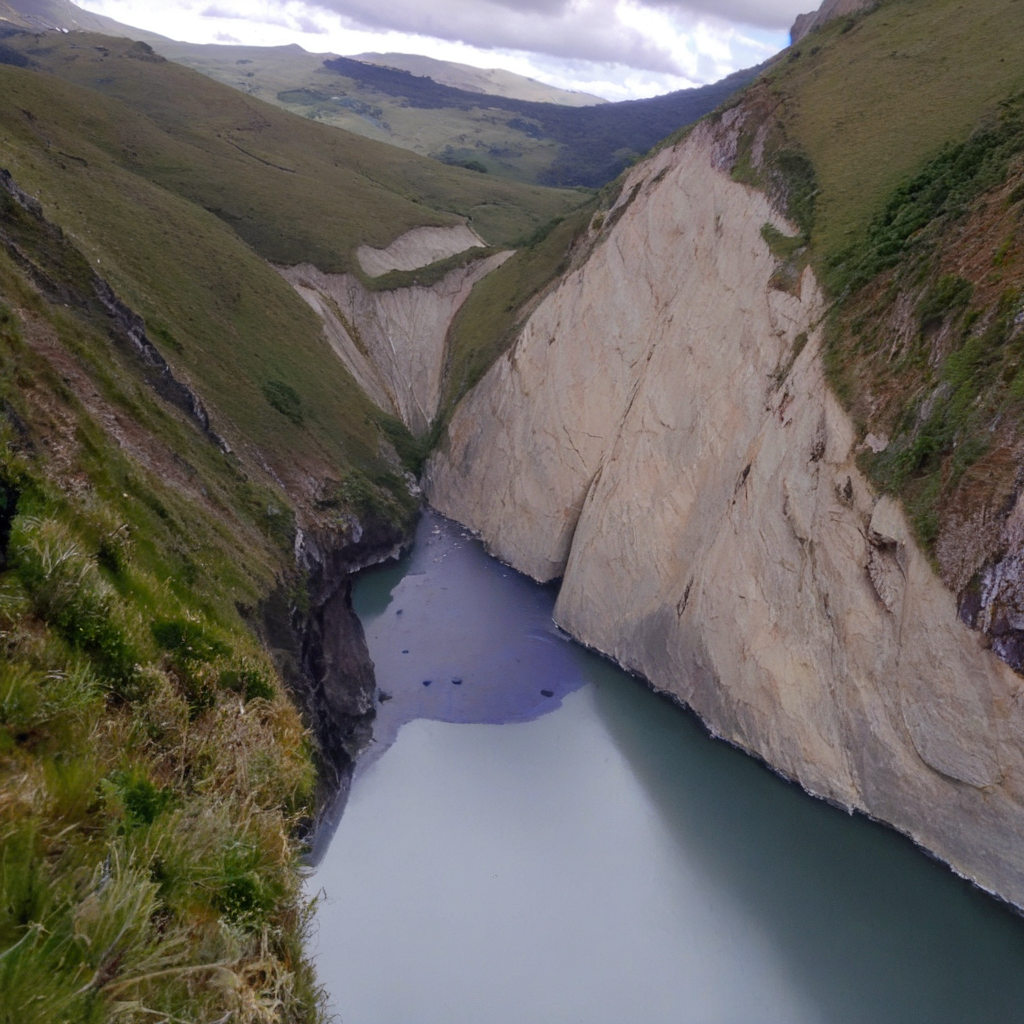 |
| User 36 (me) | User 34 |
I’ve gone through and rated images with this setup multiple times, and although the dataset is constrained to photos, I feel that the images generated initially are reasonably within my aesthetic preferences.
More importantly, running the system iteratively by using images generated from my user embedding that are then added back into the interaction matrix produces results that quickly hone into areas of latent space that I find compelling, even though I’m rating them at that point without collaboration.
 An image generated using iterative feedback without collaboration.
Scaling this sort of system is beyond the scope of this work and would require a larger dataset & optimizations to the WALS implementation, but collaborative filtering is commonly deployed at scale.
So I would expect the implementation of this kind of system to be possible across large existing sets of data held by groups focused on image generation & with varied forms of media including video.
In other words, I see no reason that social media sites that work similarly to today’s but leveraging mostly or solely synthetic media shouldn’t be possible.
Within My Practice
I’ve been interested in this general idea for a few years and have approached it from a few angles.
I’ve found that I’ve enjoyed the process even with my most data-hungry and least-successful attempts, including:
- rating several hundred images over the course of an evening to feed into DPO
- using DRaFT with customized prompts.
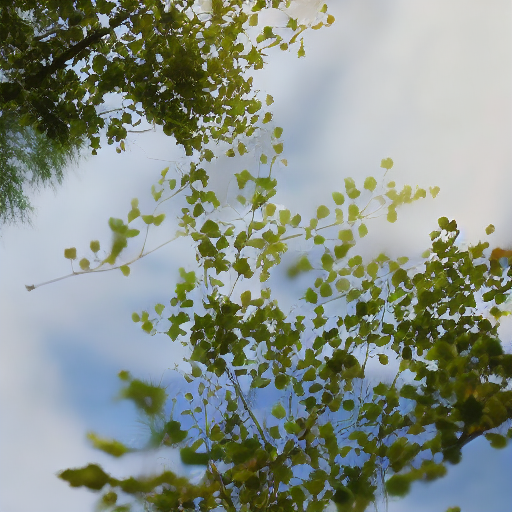 An image from my DPO experiment.
What’s somewhat surprising to me is that sinking hours into this type of work hasn’t made me enjoy the process less, and that I have a sense of authorship that’s comparable to or greater than when I craft a prompt for even an hour.
Ideally, methods like this could allow us to escape the confines of aesthetics that are:
- smooth
- one-size-fits-all
- corporate
- obsessively realistic
– par the course for many contemporary approaches – in favor of aesthetics that are personal and surprising, even if unnamable.
Potential Implications
Imagining a world where media is not only distributed in large part by algorithms but also jointly created by users and algos is… not appealing at first brush.
Social media is already fraught – apps like TikTok are no exception – and the idea of taking “consumers” further into the loop while removing “content creators” (I think this terminology indicates some of the existing problem) entirely doesn’t seem to be a direction that creates an interesting and healthy system.
So why write about a potential Pandora’s Box (especially from a technical perspective) at all?
I’ve reflected on what it means for our lives to be dictated by (or at least heavily involved with) algorithms that are created and controlled by large corporations, and while I still wouldn’t work in many domains, I’ve started to realize that stifling ideas like text-to-image in their cradle was never something that any one person could do. (This isn’t the first Pandora’s box I’ve come across!)
But there are things that we as individual:
- artists
- researchers
- engineers
can do:
- let some light in
- contribute to open projects
- steer the technology as best we can
while pushing to make impactful tech less harmful and more useful.
Related work
(Revision 5/25/2025)
Returning to this idea, I’ve found and looked through more prior work, including:
This work conditions model edits, generation, and retrieval on:
- instructions
- user embeddings from existing recommender systems
- averaged CLIP embeddings
This approach decouples generation from the recommender systems, which allows for models that are trained specifically for predicting from preference data.
While this approach allows for creating models specifically trained to predict from preference data, in the case of user embeddings from a separate recommender system this could require re-training to account for drift over time.
In the case of averaged CLIP embeddings, the approach is similar to this work, though I’d expect important information to be lost in the averaging.
Conditioning on a sequence of representations of preferred media seems like a promising direction.
Follow up work
(Revision 6/6/2025)
See my Preference Prior repo:
https://github.com/rynmurdock/preference-prior
for an example of a model conditioning on a sequence of preferred media embeddings in order to produce a left-out embedding of preferred media. This method explicitly models the mapping between user preference to generated media based on user interaction histories as opposed to old-fashioned matrix factorization, hoping to learn more complex relationships.
Acknowledgements
Thanks to Joel Simon for general feedback along with thoughts & suggestions regarding monocultures of style & inspecting user embeddings’ similarity.
Thanks to Max Bittker for discussion on roaming the latent space at Stochastic.
Thanks to Aaron Hertzmann for pointing me towards classic work on collaborative filtering for image aesthetics.
This work was done in part during my residency at Stochastic Labs
and also during my employment at Leonardo AI.
I may have more thoughts on this through the lens of personalization.
There are interesting critiques surrounding the idea of providing media that is never challenging, posed by Cat Manning & others.
If you’re interested in related analysis: Epstein et al., 2021
If you feel like I’ve left something out, feel free to contact me over email :)